Design Resources

The Rug Guide

Good design starts from the ground up. A rug is the largest color, texture, and comfort decision in almost any room — and the one that's hardest to get right by eye. This guide covers the exact rules we use on every project: what size to buy for each room, where the furniture legs belong, how to layer rugs the Pure Salt way, and which materials earn their keep in a busy (and maybe sandy) home.

Pure Salt x Momeni Menorca Bazaar Ivory Rug

01 // Choosing Rugs

Start from the ground up

When we start a room from scratch, the rug is one of the first decisions — not the last. It sets the palette that pillows, throws, and even artwork will echo, and it defines where the furniture lives. If you're furnishing new, let a rug you love lead. If you're finishing an existing room, your furniture arrangement now dictates the size — which is why the next section matters more than any other on this page.

Three questions that narrow the search fast:

How hard will this rug work?

A formal living room and a family room with kids, dogs, and beach days need very different rugs. Be honest about traffic before you fall for a pale plush pile.

Is this the room's texture or its pattern?

Every room needs both, but the rug only has to carry one. If your upholstery and drapery are quiet, the rug can bring pattern; if the room is already layered, a textural neutral is the calmer move.

What's underfoot right now?

Hardwood wants warmth and coverage; tile wants softness; wall-to-wall carpet can still take a layered area rug to define a zone (yes — rug on carpet works, and we do it often).

Pure Salt Shoppe - Free Shipping

02 // Size Rules

Get the size right (solve this first)

The golden rule: bigger is usually better. A rug that's too small makes furniture look like it's floating; a generously sized rug makes the same room feel larger and more finished. When you're between two sizes, go up.

Quick reference size chart

Quick reference size chart
Your Furniture Rug Size To Start With
Standard sofa (84") + chairs 8' x 10'
Large sofa or sectional 9' x 12' or larger
Dining table for 4–6 8' x 10'
Dining table for 8+ 9' x 12' or larger
Round dining table 8' round
Queen bed 8' x 10'
King bed 9' x 12'
Side of bed / galley kitchen / hallway 2'6" x 8' runner

03 // Rooms & Layouts

Where the rug goes (and where the legs go)

01

Living Room

All furniture legs on the rug is the ideal; but front legs on, back legs off is the smart compromise if needed. Never let a rug float unanchored in front of the sofa — and always choose a rug wider than the sofa by at least 6 inches per side.

Rule of thumb: rug wider than the sofa by 6" per side

02

Dining Room

The rug frames the table: center it under the table (aligned with the fixture above) and keep a 24-inch allowance on every side so chairs stay on the rug even when pulled out. Favor flatweave or low pile — chairs slide, crumbs vacuum out, and pattern forgives what dinner parties leave behind.

Rule of thumb: 24" of rug beyond the table on every side

03

Bedroom

The rug's job is a soft landing on bare feet. Run it under the lower two-thirds of the bed — starting just in front of the nightstands — so 18–24 inches of warmth surrounds the three sides you actually step on. A bench at the foot of the bed should sit fully on the rug.

Rule of thumb: 18–24" of rug on the three sides you step on

04

Entry & Hallways

A runner turns a pass-through into a moment. Center it with 4–6 inches of floor showing on each side, ending a few inches short of doorways. Choose something that hides life — braided naturals like our Cassis Braid live happily here. At the front door, layer a doormat over a flat indoor/outdoor rug for the collected double-layer welcome.

Rule of thumb: 4–6" of floor showing on each side — shop runners

05

Kitchen & Outdoor

In the kitchen, a low-pile runner along the sink line adds softness where you stand longest — Koukila and indoor/outdoor territory. Outside, treat covered patios like living rooms: same sizing rules, performance materials. Our Rustle and Lano styles are built for salt air and sunscreen season.

Rule of thumb: same sizing rules, performance fibers — shop outdoor rugs

04 // Layering & Styling

Layered from the ground up

Layering is how a room gets that collected, been-loved look — and it solves real problems: the small rug you love in a big room, plush texture in a high-traffic space, rental floors you can't change.

01 // Start with a natural base.

A flatwoven jute, seagrass, or braided natural — sized by the rules above, as if it were the room's only rug. Jute and braids are built for this job.

02 // Top layer no less than two-thirds the base.

An 8x10 base takes a 5x8 or 6x9 on top. The visible border of base rug is what reads as intentional.

03 // Let the top carry the personality.

Pattern, plush pile, or a vintage wash — style in the spotlight, protected from the heaviest wear by the base rug underneath.

04 // Anchor it.

Center under the coffee table or shift deliberately toward the sofa.

Layering plays

Foot of the bed

A smaller textural layer across the base rug adds a soft step-out moment.

Over wall-to-wall carpet

Define a seating zone if you can't change the floor — firm, low-pile rug + carpet pad.

The doorway double

Doormat over a flat indoor/outdoor rug: two sand-catching layers, instantly styled.

The cozy sub-zone

A small plush layer marks a reading corner or hearth without moving furniture.

05 // Materials

Materials: what you're really choosing

Material is where lifestyle meets look. Each fiber has a personality — and a job it's best at.

Sincen Wool Rug
Wool

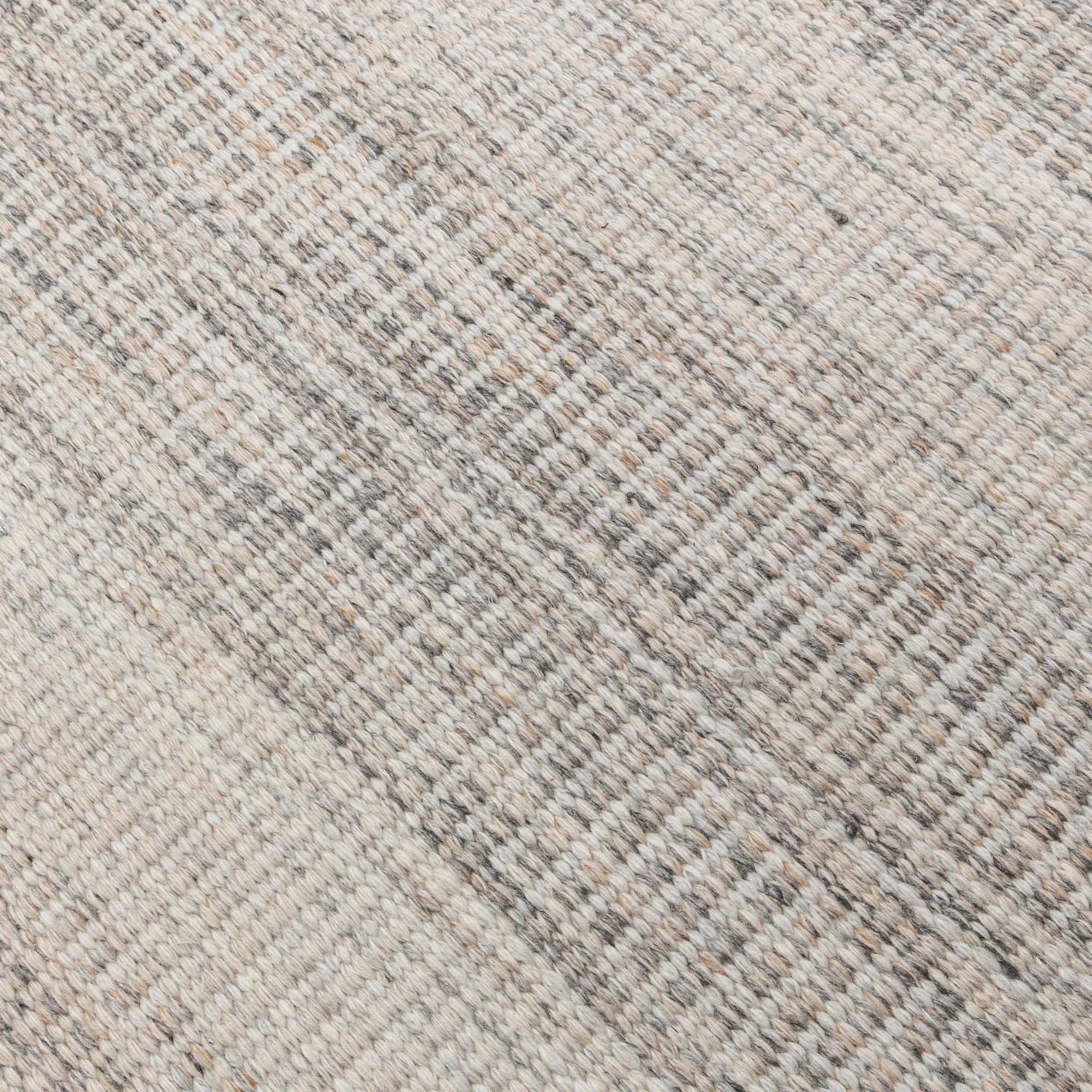
The gold standard — soft, durable, naturally stain-resistant. Worth the investment where you'll feel it daily.

Atheen Jute Rug
Jute & Naturals

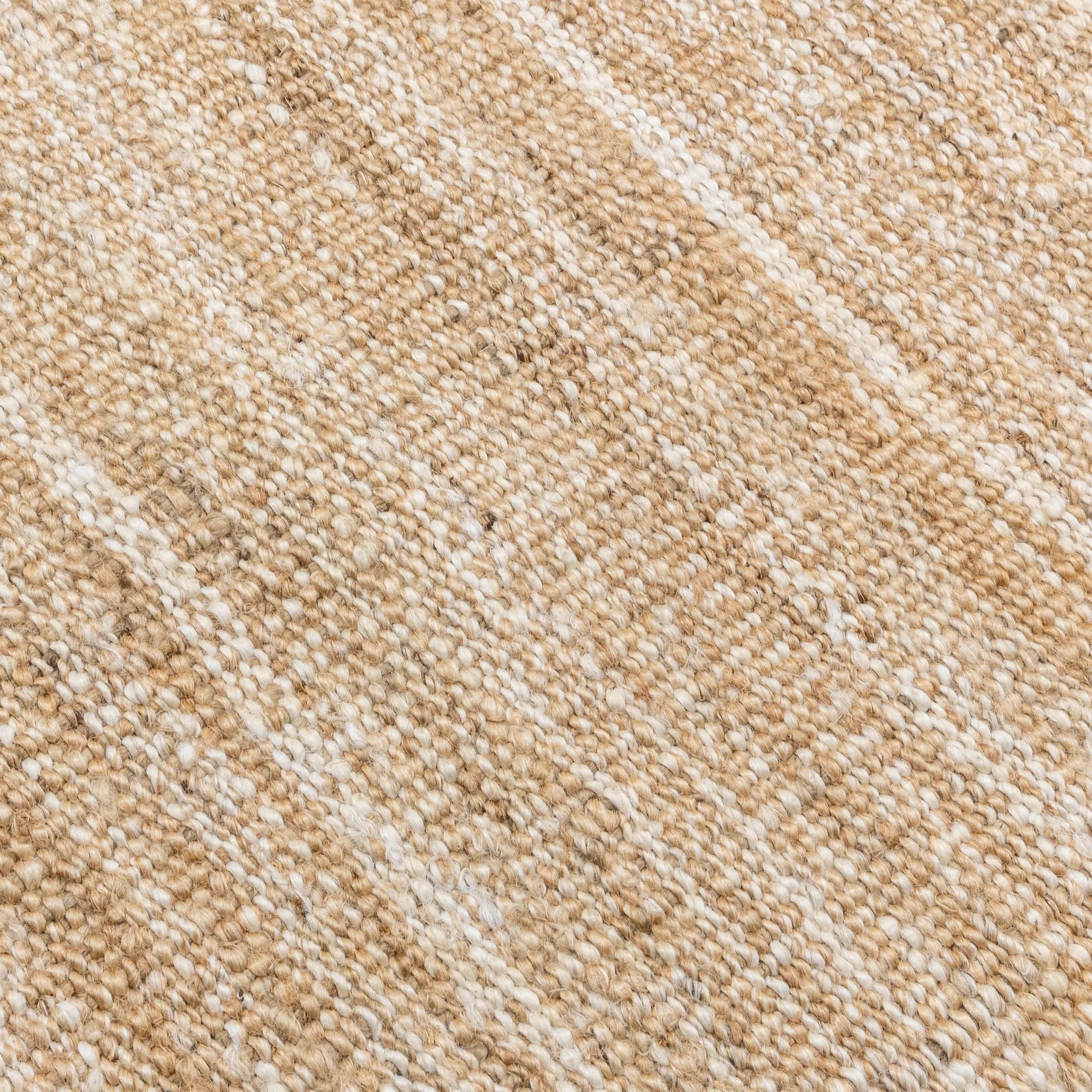
The coastal foundation. Instant texture, hides sandy footprints, ideal solo or as a layering base.

Kingsley Rug
Cotton & Flatweave

Lightweight, casual, often washable or reversible — kitchens, kids' rooms, nimble top layers.

Lancen Performance Indoor/Outdoor Rug
Performance

Fibers that shrug off spills, sun, and traffic. Outdoors — and underrated indoors at entries and mudrooms.

Minen Boucle Rug, Ivory
Bouclé & Plush

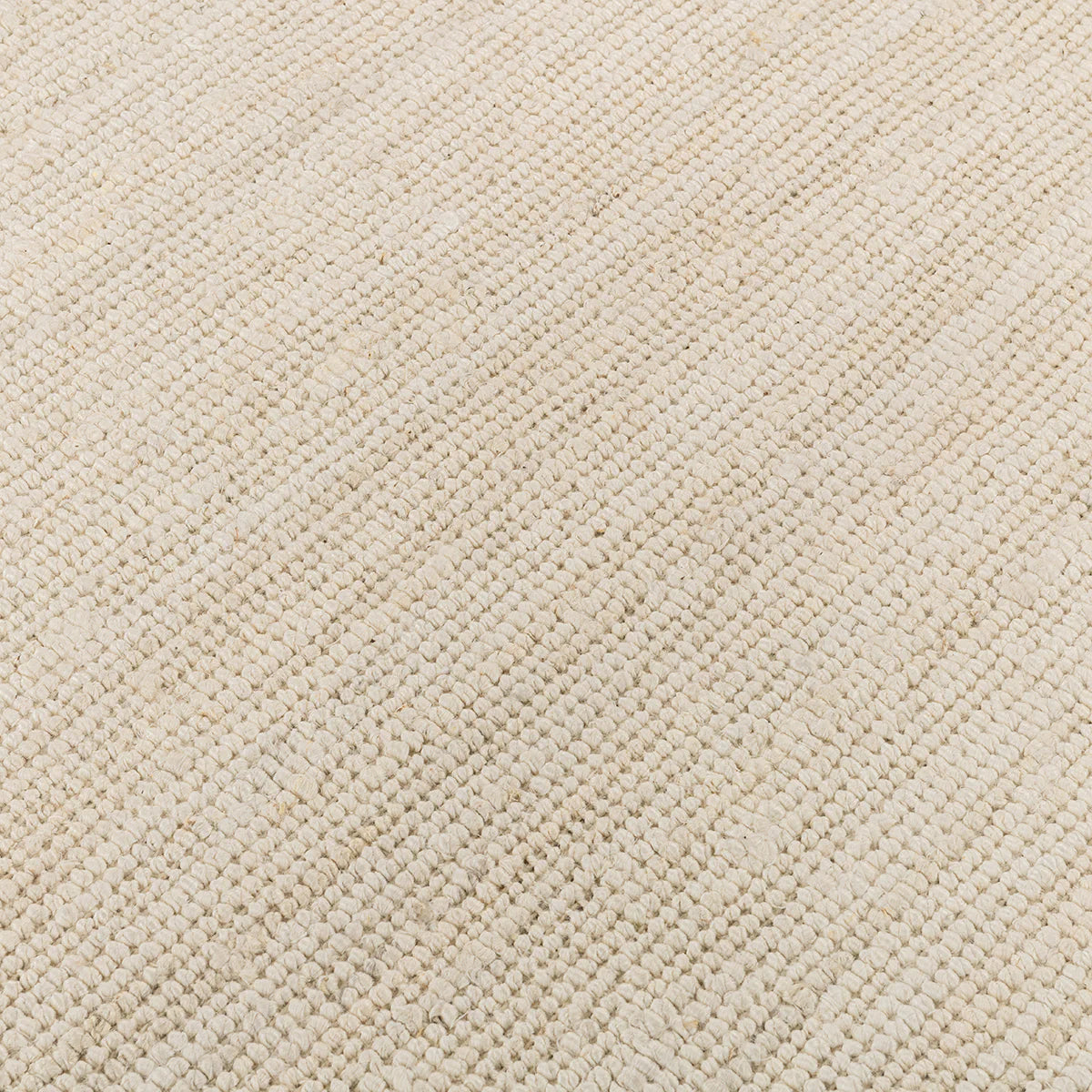
All about feel — give them the low-traffic, high-barefoot rooms like bedrooms and lounges.

Kids, pets, traffic

Wool blend, flatweave, or performance.

Beach-adjacent home

Naturals + indoor/outdoor, low pile.

Barefoot comfort

Wool or plush textures.

When in doubt

Wool — it outlives trends and most furniture.

06 // Construction

Why two similar rugs are priced differently

Two rugs can look alike online and live completely different lives. Construction explains the price tag — and predicts the lifespan.

Hand-Knotted

Every knot tied by hand; dense, intricate, no two alike. The highest investment, the longest life.

Heirloom · decades to generations
Various heights

Handwoven / Flatweave

Woven or braided on a loom; flat, often reversible — flip it and double the lifespan. The ideal layering base.

Lifetime quality
Low profile

Hand-Tufted

Yarn looped through a backing by hand — plush pile and detail at a friendlier price. The bedroom sweet spot.

Decades
Low to high pile

Power-Loomed

Machine precision and value; intricate vintage-washed patterns that would cost far more by hand.

Smart entry point
Low to medium

Flint Hills Project - Bedroom - Pure Salt

Shoppe Design

Not sure what rug to choose?

Book a Shoppe Design consultation and our team will select the size, material, and layers for every room — measurements included.

Book a consult

07 // Care

Keep it beautiful

Vacuum with the beater bar off and rotate the rug twice a year — coastal light fades floors as confidently as it fades art. Blot spills, never rub; clip sprouted ends, never pull. Keep naturals out of damp rooms, flip reversible flatweaves seasonally, and put a pad under everything.

08 // Frequently Asked Questions

What size rug should I get for my living room?

Start with an 8x10 for a standard sofa arrangement and a 9x12 for large sofas, sectionals, or open-concept rooms. The rug should be wider than your sofa, with at least the front legs of every seating piece resting on it. When you're between sizes, size up.

Should furniture be on or off the rug?

All legs on one generous rug is the ideal — everything reads as a single, grounded room. Front legs on with the back legs off is the smart compromise, as long as the rug is wider than the sofa. What never works is the floater: a rug that's too small and touches nothing.

What size rug goes under a dining table?

Center the rug under the table, aligned with the fixture above, and keep a 24-inch allowance on every side so chairs stay on the rug even when pulled out. That's an 8x10 for a table seating 4–6, a 9x12 or larger for 8+, and an 8' round under a round table. Favor flatweave or low pile so chairs slide easily.

How do you layer rugs?

Start with a natural base — jute, seagrass, or a braided flatweave — sized by the room rules as if it were the only rug. Add a top layer no smaller than two-thirds the base, so a visible border of the base reads as intentional. Let the top carry the pattern or plush, anchor it under the coffee table, and add grip: a pad under the base and a non-slip liner between layers.

What's the best rug material for high-traffic areas?

Wool blends, flatweaves, and performance fibers. Wool is naturally stain-resistant and outlives most furniture; flatweaves are low profile and often reversible; performance fibers shrug off spills, sun, and sand — which is why we use them at entries and mudrooms as often as outdoors.

Do I really need a rug pad?

Yes. A pad keeps the rug from sliding, adds cushion underfoot, protects the floor beneath, and meaningfully extends the rug's life by absorbing traffic. Put a pad under everything — and a non-slip liner between rugs whenever you layer.

Shop rugs

Find your foundation

Every rug in our collection is chosen the way we choose for clients — for texture, longevity, and the way it grounds a real, lived-in home.